





The Core Purpose of Apostille Certification
Simply put, Apostille certification verifies that the seal of the South African government agency issuing your document (such as the Department of Education, the Department of Home Affairs, or a court) is genuine and not forged. If you plan to use a South African academic credential, birth certificate, or police clearance certificate to attend university, find a job, or immigrate to another country, that country (as long as it is a member of the Hague Convention) must recognize this certification, eliminating the need to go through the hassle of having it re-certified there. Holding Time and Recommendations for South Africa apostille
Authoritative Bodies for South African Apostille Certification
In South Africa, there are primarily two types of agencies authorized to issue Hague Apostilles.
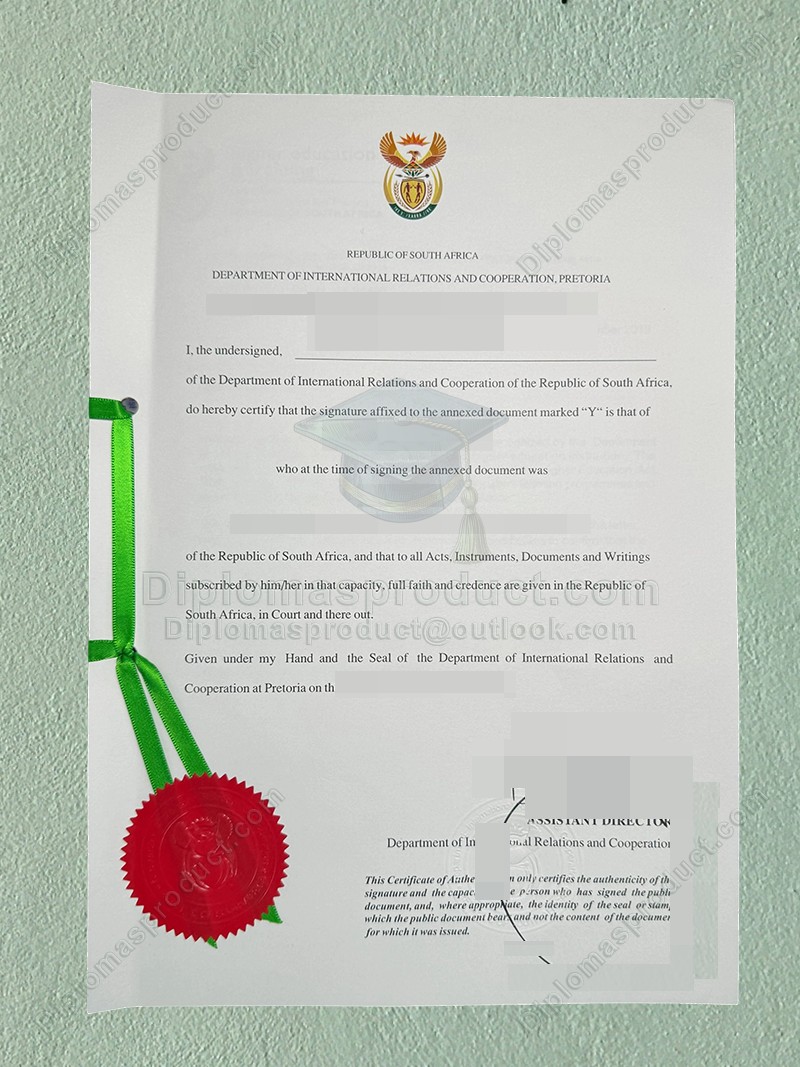
The first is the Department of International Relations and Cooperation (DIRCO) . This is the most common certification route, primarily for documents issued directly by the government. Examples include birth certificates and marriage certificates issued by the Department of Home Affairs, or university diplomas issued by the Department of Education.
The second category is the Registrar of the High Court of South Africa. This is suitable for private documents that have first been notarized by a South African notary public. For example, if you have a power of attorney or a contract, you must first have a notary public verify that there are no issues before the court registrar can issue the Apostille.
Authentication Process for Common Documents
The Hague Apostille process varies depending on the type of document and can generally be categorized as follows:
| Document Type | Processing Path | Key Features |
|---|---|---|
| Government Public Documents (e.g., birth/marriage certificates, police certificates) | Issuing Authority → DIRCO | Sealed directly by the Ministry of Foreign Affairs; no additional notarization required |
| University Degrees/Transcripts | University → Department of Higher Education → DIRCO | After the Department of Higher Education verifies the university’s seal, the document is submitted to the Department of Foreign Affairs for authentication |
| Notarized Documents (e.g., powers of attorney, contracts) | Notary Public → High Court | No need to go through the Department of Foreign Affairs, but the notary must be accredited by the High Court |
For academic documents, such as degree certificates and transcripts from local South African universities, if they are to be used for job applications or study abroad, you will typically need to first obtain a verification letter from the South African Qualifications Authority (SAQA) and apply for the Hague Apostille along with the degree certificate.
Processing Time and Recommendations
The Hague Apostille process is relatively fast. The court certification process generally takes one to five business days to complete. Processing at the Ministry of Foreign Affairs typically takes three to twenty business days, depending on the number of applications received that day. If you live outside South Africa, you can certainly hire a specialized certification service company to handle the entire process for you; they will mail the documents on your behalf, so you won’t have to make the trip yourself.